Trekking to Annapurna Base Camp (ABC) is one of Nepal’s most iconic adventures. Every year, thousands of trekkers from around the world come to experience the spectacular Himalayan views, rhododendron forests, and the unique mountain culture. However, planning your trek during the right season is crucial for safety, clear views, and an enjoyable experience. This guide will provide a detailed overview of the best time to trek Annapurna Base Camp 2026, along with a map, cost estimates, itinerary suggestions, and practical tips for both Nepali and international travelers.
| Contact | 014514568 (LandLine) 9851237317 (WhatsApp) 9851237317 (WhatsApp) 9851237317 (Viber) |
| Location | Bhagawanbahal, Kathmandu, Nepal. |
| Mail us at | hikeontrek@gmail.com |
Best Time to Trek Annapurna Base Camp 2026 Map
The ABC trek map is an essential tool for planning. The trail starts from Pokhara, passes through Nayapul, Tikhedhunga, Ghorepani, Chomrong, and finally reaches Annapurna Base Camp. The route covers a mix of forests, rivers, and alpine landscapes. Using a map with distance, trekkers can plan daily walking hours, rest points, and accommodations. This map also highlights alternative routes such as the Poon Hill ABC trek, which adds stunning sunrise viewpoints to your journey. Understanding the geography with a map ensures you are prepared for altitude changes and trekking distances.
Related: Annapurna Basecamp Trek Via Poonhill
Annapurna Base Camp Trek Cost Per Person
The Annapurna Base Camp trek cost per person depends on the package type, duration, and services included. For 2026, average costs from Kathmandu are:
Note: Private / Customized Package prices vary depending on group size, itinerary, transportation, accommodation standard, guide/porter services, and other included facilities.
Additional costs include snacks and drinks (USD 50–120), hot showers (USD 20–50), Wi-Fi (USD 10–30), tips (USD 40–100), and extra hotel nights (USD 20–80). Nepali travelers can expect NPR 18,000 – 65,000 depending on whether they hire guides, porters, or book full packages. Knowing the cost per person helps you budget effectively before departure.
Related: Annapurna Base Camp Trek Package from Kathmandu
Annapurna Base Camp Trek Best Time to Visit
The best time to visit Annapurna Base Camp is primarily determined by weather, visibility, and trail conditions. Nepal experiences four main seasons:
- Autumn (September to November): Clear skies, moderate temperatures, and dry trails make this the most popular season.
- Spring (March to May): Blooming rhododendrons and pleasant weather offer a vibrant trekking experience.
While summer (monsoon) brings heavy rains, slippery trails, and landslides, winter (December to February) has cold temperatures, especially at night, but offers snowy landscapes for adventurous trekkers. Choosing the right season ensures safety, fewer cancellations, and spectacular mountain views.
Annapurna Base Camp Trek Itinerary 10 Days
For a comfortable trek, a 10-day Annapurna Base Camp trek itinerary is ideal. Here’s a suggested plan:
- Day 1: Kathmandu to Pokhara (bus/flight)
- Day 2: Pokhara to Nayapul, trek to Tikhedhunga
- Day 3: Tikhedhunga to Ghorepani
- Day 4: Ghorepani to Poon Hill, trek to Tadapani
- Day 5: Tadapani to Chomrong
- Day 6: Chomrong to Dovan
- Day 7: Dovan to Machhapuchhre Base Camp (MBC)
- Day 8: MBC to Annapurna Base Camp and back to Dovan
- Day 9: Trek back to Nayapul
- Day 10: Nayapul to Pokhara, return to Kathmandu
This itinerary balances trekking hours, acclimatization, and rest, making it suitable for beginners and intermediate trekkers.
Annapurna Base Camp Trek Days
Most trekkers complete the ABC trek in 7 to 12 days depending on pace, acclimatization, and sightseeing stops. Shorter treks (7–8 days) are possible but require longer walking hours. For a leisurely experience, 10 days is ideal. Proper planning of trekking days helps prevent altitude sickness and allows you to enjoy scenic spots like Poon Hill and Machhapuchhre Base Camp.
Annapurna Base Camp Trek Map with Distance
A detailed ABC trek map with distance helps trekkers gauge daily walks. The total trek is approximately 115–130 km round trip from Pokhara. Distances per day vary:
- Day 1: 10 km
- Day 2: 12 km
- Day 3: 14 km and so on, with the longest stretch to ABC around 12–15 km.
This map also indicates altitude changes, water sources, and rest stops, which are vital for pacing and hydration management.
Related: Annapurna Base Camp Trek
Annapurna Base Camp in March
March marks the start of spring, making it one of the best months to trek Annapurna Base Camp for Nepali trekkers. Temperatures are mild, snow has melted on lower trails, and rhododendron flowers start blooming. This period offers ideal trekking weather with fewer crowds than autumn, allowing Nepali travelers to experience clear Himalayan panoramas.
Best Season to Visit Annapurna Base Camp
The best season to visit Annapurna Base Camp depends on personal preferences:
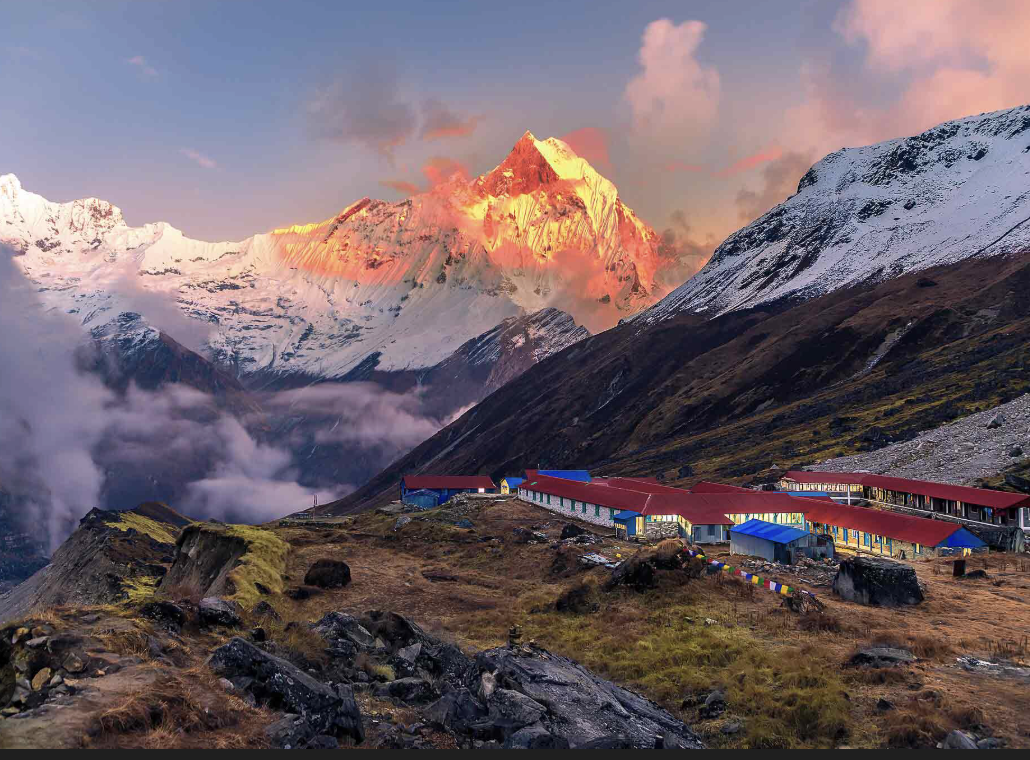
- Autumn Annapurna Base Camp trek: September–November, clear skies, ideal mountain views
- Spring Annapurna Base Camp trek: March–May, rhododendron blooms, moderate temperature
- Winter trek: December–February, snowy trails, less crowded, very cold nights
- Monsoon trek: June–August, not recommended due to rain and landslides
Annapurna Base Camp Trek Weather
Understanding ABC trek weather is essential for packing and preparation. Key points:
- Day temperatures: 15°C – 25°C in lower regions
- Night temperatures: 0°C – 10°C in lower regions, -5°C to -15°C near ABC
- Rainfall: Highest in monsoon season (June–August)
- Snowfall: Common above 3,500 m in winter
Weather conditions directly affect trail safety, visibility of Himalayan peaks, and trekking comfort.
Ideal Months to Trek ABC
The ideal months to trek ABC are September–November and March–May. These months offer:
- Clear skies and stunning mountain views
- Moderate temperatures suitable for trekking
- Dry trails with minimal rainfall
- Opportunity to see rhododendron flowers (spring) or colorful autumn landscapes
Choosing the right month ensures a memorable trekking experience with minimal challenges.
Annapurna Base Camp Trek Climate
The ABC trek climate varies with altitude:
- Subtropical: Trek start to Ghorepani (~1,400–2,800 m)
- Temperate: Ghorepani to Chomrong (~2,800–3,200 m)
- Alpine: Machhapuchhre Base Camp to Annapurna Base Camp (~3,700–4,130 m)
Understanding the climate helps you pack proper clothing, gear, and plan acclimatization days.
Annapurna Base Camp Trek Timing Guide
The ABC trek timing guide helps trekkers plan walking hours efficiently:
- Daily trek: 4–7 hours on average
- Rest breaks: 10–15 minutes every 1–2 hours
- Acclimatization: Extra day at Ghorepani or Chomrong recommended
- Sunrise visits: Poon Hill for spectacular morning views
Proper timing prevents fatigue and altitude-related issues while allowing you to enjoy key viewpoints.
Best Trekking Months Annapurna Base Camp
To summarize, the best trekking months for Annapurna Base Camp are:
Avoid monsoon and extreme winter months unless you are an experienced trekker seeking snow-covered trails.
Annapurna Base Camp Trek Best Period
For 2026, the best period to trek Annapurna Base Camp is:
- Autumn: Mid-September to late November
- Spring: Early March to mid-May
During these periods, trekkers can enjoy breathtaking Himalayan scenery, favorable weather, and minimal trail congestion. Planning in advance ensures accommodation availability and smooth logistics.
The Annapurna Base Camp trek 2026 offers unmatched adventure and Himalayan beauty, but timing is critical. The best time to trek depends on weather, altitude conditions, and personal preferences, with autumn (Sep–Nov) and spring (Mar–May) being ideal. Using the ABC trek map with distance, understanding trek cost per person, and following a structured 10-day itinerary ensures a safe, enjoyable, and memorable experience. Whether you are a Nepali trekker or an international adventurer, 2026 is a perfect year to explore the Annapurna region with HikeOnTreks guiding your journey.
With the right preparation, Annapurna Base Camp trek timing guide, and knowledge of ABC trek climate, every step brings you closer to witnessing one of the most breathtaking natural amphitheaters on Earth. Start planning now and make 2026 your year to conquer Annapurna Base Camp!
Recent Blogs
-
Annapurna Base Camp Trek from Pokhara
28th September 2026 -
New & Rising Treks in Nepal for 2026: 7 Less-Crowded Routes to Explore
16th September 2026 -
Pathibhara Temple Tour from Kathmandu
9th September 2026 -
Tourist Visa from Nepal 2026/27
23rd August 2026 -
Bali Indonesia Tourist Visa from Nepal 2026/27
28th July 2026 -
Chitlang Kulekhani Two Day Tour 2026
22nd July 2026


